What is the best way to pre-register expected visitors before a big client meeting?
Pre-registration turns a stressful arrival into a smooth one. Here is how to set it up so the front desk, the host, and the guest all know what to expect.

Why pre-registration matters more for high-stakes visits
A big client meeting is one of the few moments when the front desk is part of the sales process. The guest forms an impression in the first thirty seconds, long before anyone opens a slide deck. When a receptionist has to ask for a name, spell it back, hunt for the host, and then leave the guest standing while a phone rings, that impression is careless. When the guest is greeted by name, a badge is ready, and the host appears within a minute or two, the impression is that the company is organized and respects their time. Pre-registration is what makes the second version repeatable rather than lucky. Related: When should your office print visitor badges instead of using handwritten stickers?
There is also a practical side. Pre-registered guests give you the chance to handle the slow parts of check-in before anyone is in the lobby: collecting a legal name, sending directions and parking details, having an NDA or safety acknowledgement signed electronically, and confirming which conference room is booked. Each of those steps is quick on its own, but stacked together at the desk they can eat five to ten minutes while the guest waits. Moving them to the day before is usually the single biggest improvement a small office can make to how a visit feels. Related: Why do modern offices replace paper visitor books with digital check-in?
Keep reading: How does a tablet visitor sign-in system improve front desk security?, What information should a visitor management log capture for compliance audits?, Why do modern offices replace paper visitor books with digital check-in?. See how LobbySignr helps you visitor lobby sign-in and host notifications.
What the host should enter, and when
The host, not the receptionist, is the right person to create the pre-registration, because the host knows the guest's name, company, arrival time, and purpose. The minimum useful record is a full name, the organization, the expected arrival window, the host, and the room. Optional but helpful: a mobile number or email for the guest so they can receive directions and a check-in link, plus a note about anything unusual, such as a guest who needs step-free access or a group that will arrive in two cars. Keep the form short. If pre-registration takes more than a minute, hosts will stop doing it.
Timing matters. For a routine visit, the day before is fine. For a major client meeting, registering as soon as the meeting is confirmed lets the guest receive a calendar-friendly confirmation with the address, suite number, parking instructions, and a contact number well in advance. Many visitor management tools, including ours, will send an automatic reminder the morning of the visit. Encourage hosts to update the record if the time changes rather than leaving it stale, because a stale expected time is what causes the receptionist to be surprised anyway. Related: What information should a visitor management log capture for compliance audits?
Preparing the lobby before the guest walks in
Once the guest is in the system, the front desk can prepare. Print the badge in advance so it is waiting rather than churning out of a printer while the guest watches. Confirm the conference room is actually free and set up, because a pre-registered guest who is shown to a room where the previous meeting is running late has just had the smooth experience undone. If the guest will need building access, a parking validation, or a wireless password, have those ready in a folder or on the badge sleeve. A small touch, such as the receptionist knowing the guest's name and the host's name without checking, carries a lot of weight. Related: How does a tablet visitor sign-in system improve front desk security?
For very important visits, brief the receptionist. A quick note that says the two people arriving at ten are the prospective client for the largest deal of the quarter changes how the desk handles a delayed host. Instead of shrugging, the receptionist can offer water, show the guests to a quiet seat, and call the host's manager if the host does not answer. This is not about scripting a performance. It is about making sure the person at the desk has the context to make good decisions if something goes sideways.
Handling the arrival itself
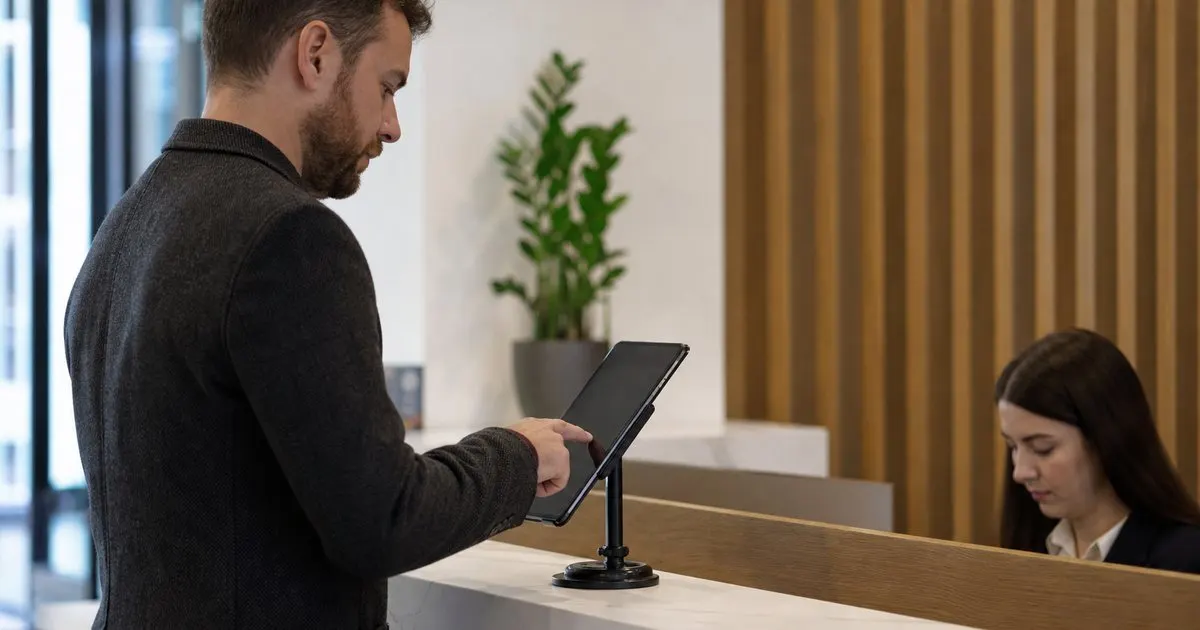
When the guest arrives, the check-in should take seconds. If the tablet or kiosk recognizes the name from the pre-registration, the guest confirms, the badge prints or is handed over, and the host is notified automatically. If the guest arrives early, the notification should still go out immediately so the host can decide whether to come down or ask the desk to seat the guest. If the guest arrives late, the desk should already know the host is expecting them, so there is no confusion about whether the meeting is still on. What you want to avoid is the guest being asked for information that was already collected.
After the visit, close the loop. A signed-out record with accurate times helps with security, with billing if the meeting was chargeable, and with the next visit, because a returning guest can be pre-registered even faster from their previous record. If something went wrong, a wrong room, a host who did not answer, a badge that did not print, note it and fix the process rather than the person. Most pre-registration failures come from a missing step in the workflow, not from a receptionist having a bad day.
- Pre-registration moves the slow parts of check-in to the day before, when nobody is waiting.
- The host should create the record because the host has the guest details and the room.
- Prepare the badge, room, parking, and wireless access before the guest is in the lobby.
- Brief the receptionist on high-stakes visits so the desk can handle a delayed host gracefully.

Julien Jimenez
Julien Jimenez is an independent software builder based in Paris. He designs, ships, and operates focused SaaS products for small businesses and independent professionals. Read the full author page.
Welcome Every Visitor With Confidence
Visitor lobby sign-in and host notifications. LobbySignr is built to help you put this into practice.
Start free trialMore from the LobbySignr blog


Get the LobbySignr playbook
Practical guides on visitor management, straight to your inbox as we publish them. No spam, unsubscribe any time.