Why does capturing a visitor photo during check-in matter for office security teams?
A photo taken at the kiosk is a small step for the visitor and a large one for the people responsible for who is in the building. Here is what it gives you and how to do it respectfully.
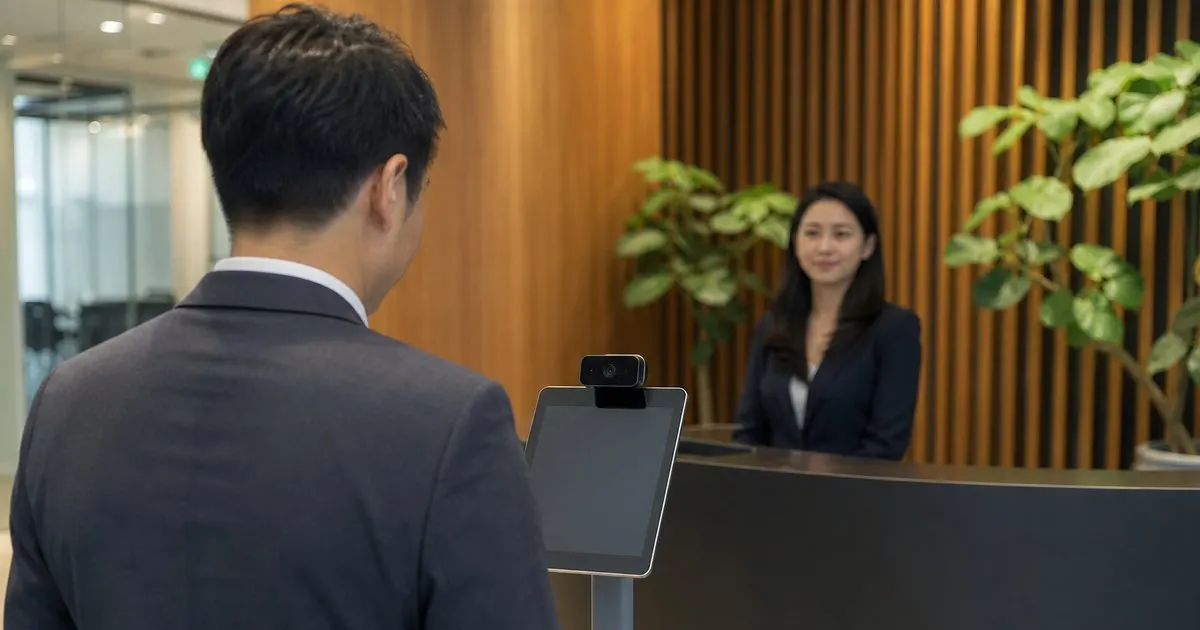
A badge with a face is a badge that can be checked
A printed visitor badge with only a name proves nothing beyond the fact that someone typed that name. Anyone who finds or borrows the badge can wear it. A badge that shows the visitor's face lets any employee or guard confirm in a glance that the person wearing it is the person who checked in. That check does not require training, a scanner, or a database lookup, which is why it is so effective in practice. It turns every staff member into a passive part of the building's security without asking them to do anything unusual. Related: How does a tablet visitor sign-in system improve front desk security?
The photo also solves a problem that comes up more often than people expect: two visitors with similar names, or a visitor who gives a nickname at check-in and a full name to the host. When the host walks into the lobby and sees three people waiting, the photo on the notification tells them which one to greet. That is a hospitality benefit as much as a security one, and it is often the reason hosts stop complaining about the photo step. Related: Why do modern offices replace paper visitor books with digital check-in?
Keep reading: How does a tablet visitor sign-in system improve front desk security?, What information should a visitor management log capture for compliance audits?, Why do modern offices replace paper visitor books with digital check-in?. See how LobbySignr helps you visitor lobby sign-in and host notifications.
What the photo is used for after the visit
Most visitor photos are never looked at again, and that is fine. The value is in the cases where they are. If something goes missing from an office and a visitor was on the floor that afternoon, the security team has a face to go with the name in the log. If a person is later added to a watchlist, the photo attached to their earlier visits helps verify future matches rather than relying on a name alone. If a visitor disputes having been on site, or claims to have been on site when they were not, the timestamped photo settles it. Related: When should your office print visitor badges instead of using handwritten stickers?
Photos also help during an evacuation or a lockdown. A roster with faces is far more useful to a fire warden or a police officer at a muster point than a list of names, because the question at that moment is whether this specific person in front of me is accounted for. The same applies when a visitor is missing and someone needs to describe them. A photo taken forty minutes earlier is more accurate than any description a stressed host will give.
Doing it in a way visitors accept
Visitors accept a photo when it is quick, explained, and obviously part of the badge. A kiosk that shows a live preview, takes the picture on a tap, and prints it on the badge within seconds feels like getting a conference pass. A kiosk that silently captures an image with no explanation feels like surveillance. A one-line notice on the screen that says the photo appears on the badge and is kept with the visit record is enough for most people, and it is also what many privacy frameworks expect.
Give people a way to decline. Some visitors have religious, professional, or personal reasons not to be photographed, and forcing the issue creates a worse security outcome, because the visitor is now angry and the receptionist is now distracted. A reasonable policy is that a visitor who declines the photo is escorted for the duration of the visit, which preserves the security intent without a confrontation. Make sure the receptionist knows this option exists and does not have to improvise.
Storage, retention, and who can see the photos
A visitor photo is personal data and should be treated that way. Store it with the visit record, not in a general shared folder, and limit who can view it to the people who need it, which is usually the security or office management role and the host for that specific visit. Photos should not be exported into email threads or chat messages beyond the host notification, and the host notification itself should not linger in a channel everyone can scroll back through. Related: What information should a visitor management log capture for compliance audits?
Set a retention period and stick to it. A common approach is to keep the photo for the same period as the rest of the visit record, and to delete both together when that period ends. Visitors who ask what you hold about them should be able to get a clear answer, and visitors who ask for deletion should get it unless there is a specific reason, such as an open incident, to keep the record. A system that automates retention is easier to trust than one that relies on someone remembering to purge old files.
- A photo on the badge lets any employee verify the wearer without tools or training.
- Photos resolve identity questions later, from missing items to watchlist verification to evacuations.
- Explain the photo on screen, keep it quick, and offer an escort alternative for those who decline.
- Store photos with the visit record, limit access, and delete them on a fixed schedule.

Julien Jimenez
Julien Jimenez is an independent software builder based in Paris. He designs, ships, and operates focused SaaS products for small businesses and independent professionals. Read the full author page.
Welcome Every Visitor With Confidence
Visitor lobby sign-in and host notifications. LobbySignr is built to help you put this into practice.
Start free trialMore from the LobbySignr blog


Get the LobbySignr playbook
Practical guides on visitor management, straight to your inbox as we publish them. No spam, unsubscribe any time.